

Pollard cycles maintained with a clear purpose
Old points identified
We inspect previous cuts before deciding where current growth should return.
Regrowth assessed
Shoot size and condition help determine the need and timing for repeat work.
Appearance explained
You know why the crown looks bare at first and how regrowth is expected.
Repeat management for established pollard points
Pollarding is a specific pruning system, not simply another name for cutting a tree hard. New growth is periodically removed back to established pollard points, helping control crown size in a restricted setting. It is often most relevant where a tree has already been managed this way and has produced a fresh mass of shoots. We inspect the species, age, old cutting points and condition of the regrowth before recommending work. A consistent cycle matters because allowing shoots to become large can increase loading around the pollard heads and make later management more demanding.
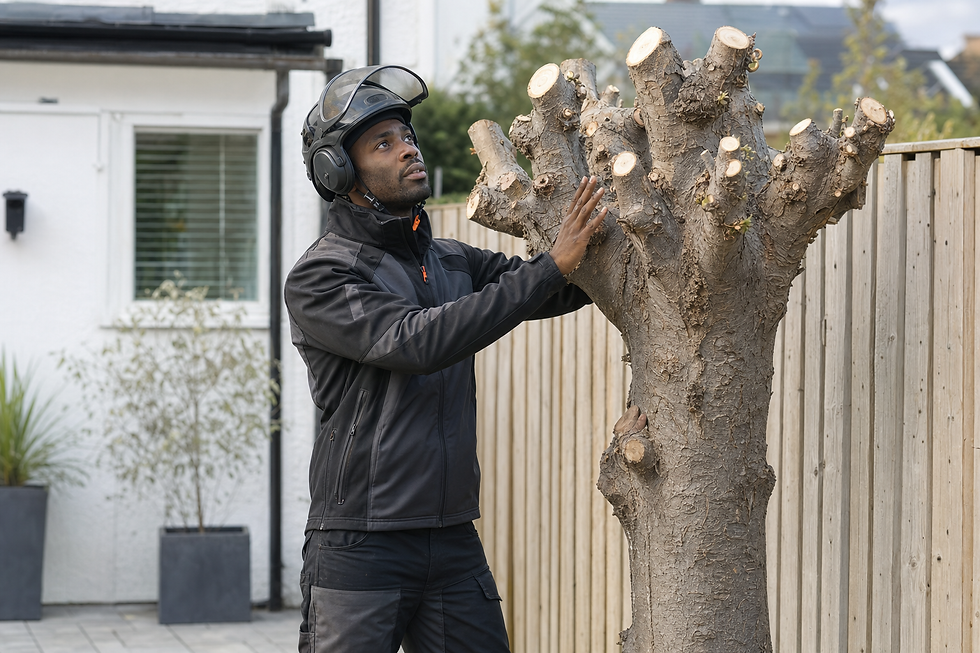
Know what the tree will look like afterwards
Immediately after tree pollarding, the crown can appear stark. That visible change is part of the system, and new shoots develop afterwards according to the species and season. We explain this before work begins so the finished tree does not come as a surprise. Cuts are planned around established points rather than invented at random across the canopy. If a tree has never been pollarded, its suitability needs careful assessment because starting a severe cycle on a mature tree may not be appropriate. In that case, reduction or another form of pruning may better match your aim.
Frequently asked questions
How often does a pollarded tree need cutting?
There is no single interval for every tree. Species, shoot growth, previous management and the restricted setting all matter. We inspect the pollard heads and recommend a cycle suited to their current condition.
Can any mature tree be pollarded for the first time?
No. Starting pollarding can be too severe for some mature trees or species. We assess age, health and structure first. A measured crown reduction or selective pruning may be a more suitable way to manage size.
Why does a tree look so bare after pollarding?
The method removes new shoots back to established pollard points, so the immediate outline is deliberately stark. Fresh growth follows, although its speed and density depend on the species, season and tree condition.